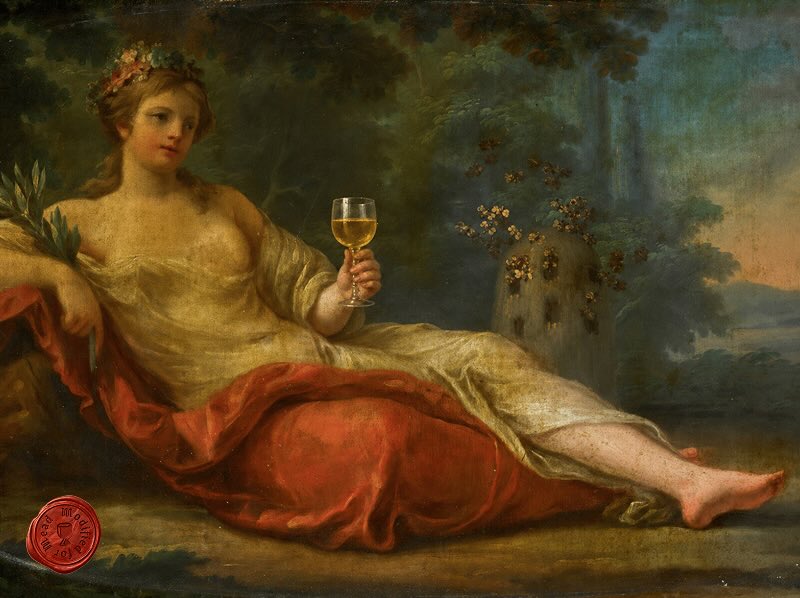
Mead, like wine or beer, is a fermented drink, meaning that it's made from yeast converting natural sugars into alcohol over time. If you’re used to thinking about wine as fermented grapes or beer as fermented grain, mead is a similar drink with a different starting point: honey! Just as wines are defined by the types of grapes that went in, meads are also defined by the types, or varietals, of honey that are used to make them.
And what makes each honey varietal taste different is fascinating. Depending on what the bees are feeding on, it can bring in floral, herbal, or darker, more earthy notes—and those show up in the finished drink more than most people expect. Honey isn’t a single flavor. Orange blossom honey can come across bright and citrusy. Buckwheat honey can be dark and almost molasses-like. Wildflower honey can shift year to year. In other words, the raw ingredient already has more range than most people assume before fermentation even starts.
In theory, there are as many varietals of honey as their are flowering plants. In practice, bees prefer some flowers over others, and beekeepers will place hives in locations near preferred flowers and away from others. In fact there are some flowers that are poisonous to bees.
FUN FACT: not all bees make honey—only honey bees do. Out of the thousands of bee species out there, most are solitary and don’t produce or store honey at all. Honey bees are unique because they live in large colonies and make honey as a long-term food supply, storing it in hives to survive periods when flowers aren’t in bloom.
What does mead actually taste like?
This is usually where people are surprised. A lot of people expect mead to be heavy and sweet. Some of it is, but plenty of it isn’t.
A lot of modern mead is fermented completely dry. This means there is little to no sugar is left once it's ready to drink. If you didn’t know it was made from honey, you might not guess it.
You’ll find bottles of mead that drink close to a dry white wine, others that feel richer and more dessert-like. Some are still, some have carbonation. Some are light enough to open on a warm afternoon, others are better poured slowly at the end of a meal. There isn’t a single “default” version. There's a wide world of mead, even if it isn't very big.
Mead also covers a large range of alcohol levels. Lower level bottles sit around 5–7% (closer to beer), while others land in the 12–16% range (more like wine). You’ll find some pushing higher.
If you’ve spent any time with less conventional wines, that’s probably the closest comparison. Mead isn’t as standardized as beer, and it doesn’t follow the same expectations people bring to wine either. It can vary quite a bit from one bottle to the next.
If you start tasting the meads available on the market today, a few things might stand out. The aroma can lean floral or herbal, depending on the honey. The texture is often softer than beer, sometimes lighter than you’d expect. The finish can go either direction—clean and dry, or lingering with a bit of honey character. You might come across something fermented with fruit that drinks like a light red wine, or a sparkling mead that feels closer to a pét-nat. Others lean into the honey itself and stay more minimal.None of that is universal, but it gives you a feel for the range.
Compared with other beverages
Part of what makes mead harder to pin down is that there isn’t a shared reference point yet.
With beer, most people have a sense of light vs hoppy. With wine, at least red vs white gets you somewhere. Mead doesn’t have that kind of shorthand. Two bottles labeled “mead” can be completely different experiences. That unpredictability can make a first try feel like a gamble. But it’s also the reason people get into it. Once you find a style or producer you like, there’s a lot to explore from there.
A quick history of mead
Mead has been around for a long time—basically anywhere people had access to honey, they figured out how to ferment it. For most of that time, it wasn’t standardized or widely traded. It was made locally, wherever honey was available.
What’s more relevant is what’s happening now. For a while, mead faded into the background as beer and wine became easier to produce and distribute at scale. But ovver the past couple decades, small producers, especially in the U.S., have been bringing it back, experimenting with different approaches and styles. So what you’ll find today isn’t a preserved tradition but a category that's figuring out how to redefine itself by a spattering of small but mighty mead-makers.
Why is it so hard to find?
Most people don’t avoid mead because they tried it and didn’t like it. Few can say they've tasted it, let alone encounter it. Part of the reason for that is cost. Honey is significantly more expensive than grain or grapes, which makes mead harder to produce at scale. That keeps most producers small and limits how far their bottles travel.
It’s still not widely distributed, and when it does show up in stores, the selection is usually narrow. A lot of what’s being made never travels far from where it’s produced, and we think that's something to celebrate.
While we'd love to see more mead on the shelves, part of the joy is in the search: finding it through small producers, where every bottle feels a bit more intentional and worth slowing down for. If you’re curious, treat it like wine—just try a few different ones when you get the chance. They don’t all taste the same, and that’s kind of the point. Some lean dry, some are richer, some feel lighter, some have more weight to them.
Why it’s worth exploring
The hard part has always been finding it—and knowing what you’re looking at when you do.
That’s what this site, meadtasting.com, is for. A friendly directory of meaderies so you can enjoy the meads near you or on your travels plus a place to leave tasting notes as you try things. Our goal is simple: make mead easier to find, understand who’s making it, and start building a shared sense of what’s good, what’s different, and what’s worth coming back to! It’s less about presenting a finished picture of the category and more about letting people map it as they explore.
I am far from the world's mead expert. I haven't even tried that many. But I'm excited to learn more, and try more and the fact that this beverage has an ancient history, is so from the land, and all thanks to a bunch of little bees is wonderfully poetic.
Thank you bees (and beekeepers, and meadmakers) for doing what you do, and letting us enjoy your hard work.

